
XIAMEN ACEY NEW ENERGY TECHNOLOGY CO., LTD.

Kategorien
Neuer Blog
Wie man ein zylindrisches Batteriepack zusammenbaut: Prozess- & Ausrüstungsleitfaden
August 28 , 2026Anleitung zum Zusammenbau eines zylindrischen Akkupacks: Prozess- und Geräteleitfaden
Zylindrische Akkupacks, die in Elektrowerkzeugen, E-Bikes, Drohnen, tragbaren Stromstationen und Energiespeichersystemen verwendet werden, können sich hinsichtlich Spannung, Kapazität und Aufbau stark unterscheiden, aber die meisten Produktionslinien folgen einer ähnlichen Montageabfolge.
Die wichtigsten Schritte umfassen die Klassifizierung der Zellkapazität, das Aufbringen des Isolierpapiers, die Sortierung nach Leerlaufspannung und Innenwiderstand, die Zellanordnung, die Polaritätsprüfung, das Punktschweißen und die BMS-Prüfung.UndInstallation, Prüfung der fertigen Verpackung, Verpackung, Codierung und Alterungstests durch Lade-Entlade-Wechsel.
Diese Prozesse können als Offline-Arbeitsplätze, als halbautomatische Linie oder als vollautomatische Produktionslinie organisiert werden.
Montageprozess für zylindrische Akkupacks
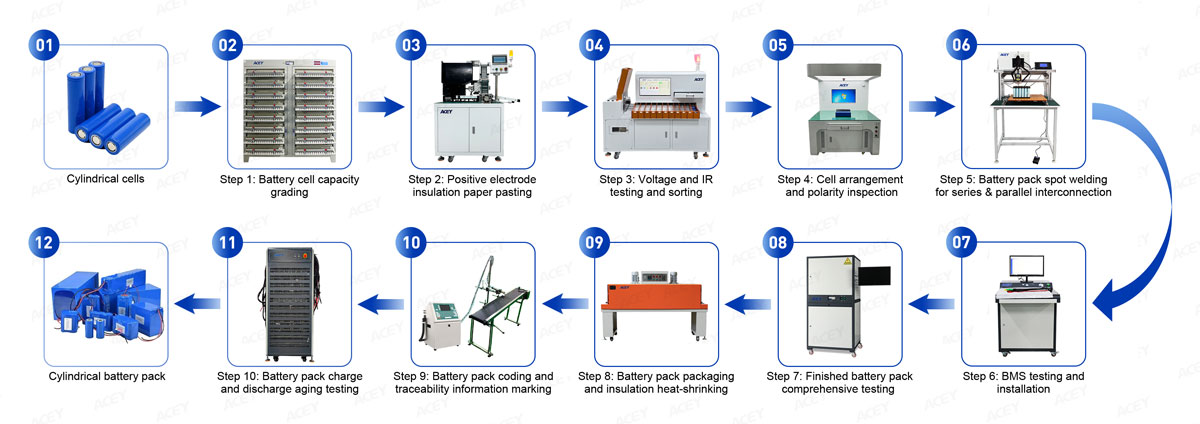
Zellkapazitätsbewertung → Isolierpapieraufklebung → OCV- und ACIR-Sortierung → Zellanordnung → Polaritätsprüfung → Punktschweißen → BMS-Test und -Installation → Batteriepack-Test → Verpackung und Codierung → Alterungsprüfung durch Laden/Entladen
Die ersten Schritte konzentrieren sich auf die Konsistenz der Zellen und deren korrekte Anordnung. Durch Schweißen und die Montage des Batteriemanagementsystems (BMS) wird die elektrische Verbindung des Akkupacks hergestellt. Anschließend werden die fertigen Akkupacks getestet und einem Alterungstest unterzogen, um die Funktionsfähigkeit der montierten Batterie vor dem Versand zu überprüfen.
Hauptkomponenten eines zylindrischen Akkus
Ein zylindrischer Akku besteht im Wesentlichen aus:
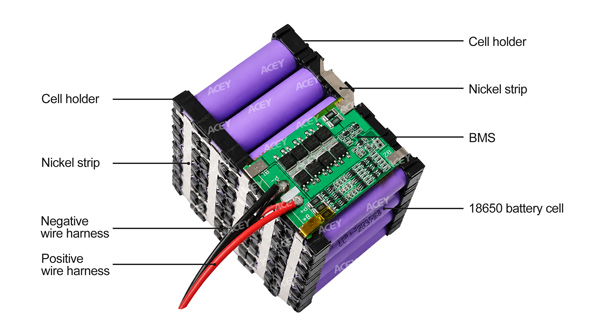
Die Reihenschaltung bestimmt die Spannung des Akkupacks, während die Parallelschaltung die Kapazität und die Strombelastbarkeit erhöht.
Gängige zylindrische Zellgrößen und Anwendungen
Unterstützte Zellenformate
14500 · 18650 · 21700 · 26650 · 32650 · 32700 · 32140 · 33140
Nicht jede Maschine verwendet die gleichen Werkzeuge. Vorrichtungen, Zellenhalter und Zuführmechanismen müssen möglicherweise ausgetauscht werden, wenn sich der Zellendurchmesser, die Zellhöhe oder die Packungsstruktur ändert.
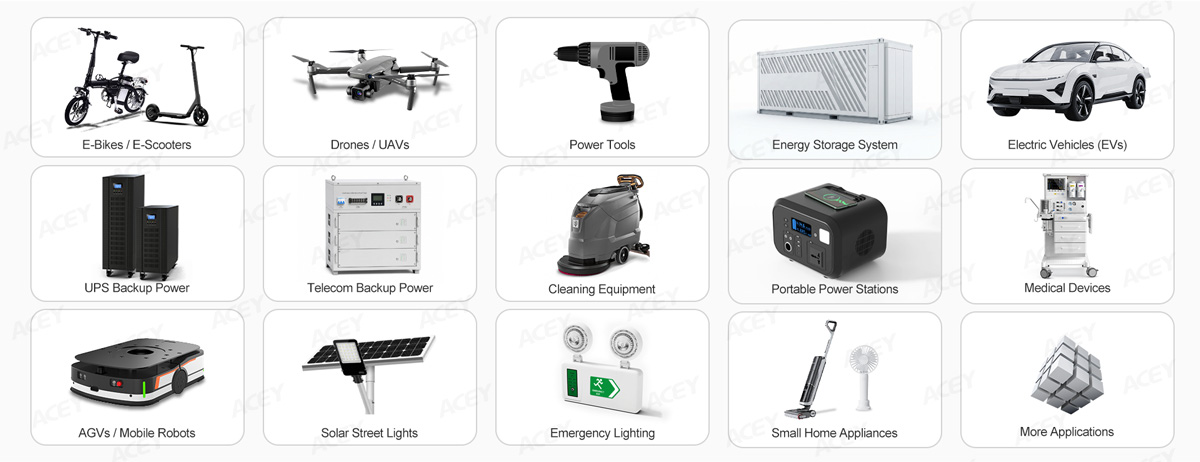
Typische Anwendungen
Welche Ausrüstung wird zur Montage eines zylindrischen Akkus verwendet?
Eine vollständige Produktionsanlage kann folgende Ausrüstung umfassen:
| Verfahren | Zweck | Ausrüstung |
| Kapazitätsklassifizierung | Zellen nach Kapazität messen und gruppieren | Batteriezellen-Sortiermaschine |
| Isolierung | Isolierpapier an den Pluspol anbringen. | Isolierpapier-Klebemaschine |
| OCV- und ACIR-Sortierung | Zellen nach Spannung und Widerstand gruppieren | Batteriesortiermaschine |
| Polaritätsprüfung | Überprüfen positive und negative Anschlüsse des Pakets | CCD-Polaritätsprüfgerät |
| Elektrischer Anschluss | Schweißen Sie die Verbindungsstreifen an die Zellen. | Akku-Punktschweißmaschine |
| BMS-Verifizierung | Funktionen der Schutzplatine testen | BMS-Tester |
| Verpackungstests abgeschlossen | Überprüfen Sie die Leistung des zusammengebauten Pakets. | Batterie-Kompletttester |
| Verpackung | Schrumpffolie anbringen | Wärmeschrumpfmaschine |
| Identifikation | Druckchargen- und Produktinformationen | Codierungsmaschine |
| Altern | Lade-Entlade-Zyklen durchführen | Alterungstester für Akkus |
Bei der Prototypen- oder Kleinserienfertigung können einige Arbeitsschritte manuell durchgeführt werden. In großen Produktionslinien werden die Prozesse automatisiert, die die Konsistenz und den Durchsatz am stärksten beeinflussen, insbesondere Sortierung, Polaritätsprüfung, Schweißen und Testen.
Schritt 1 – Bewertung der Zellenkapazität
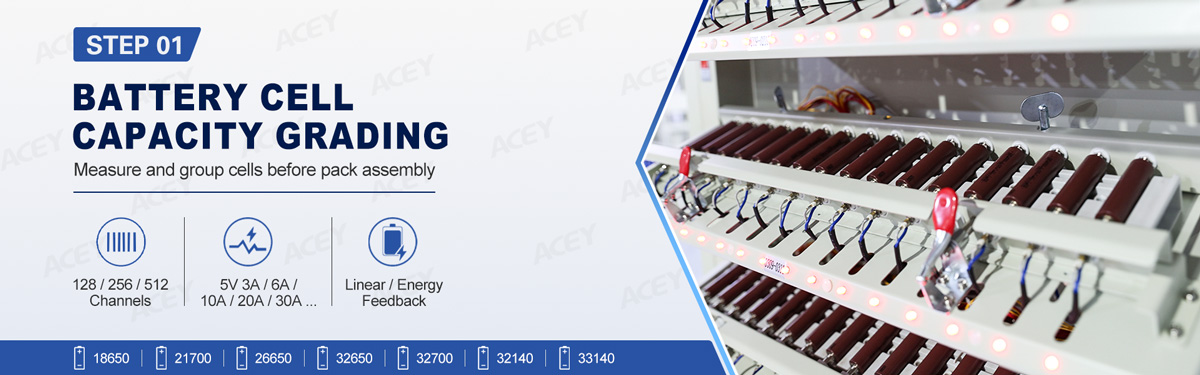
Vor der Montage werden die Zellen geladen und entladen, um die nutzbare Kapazität und die grundlegende Leistungsfähigkeit zu messen.
Ziel ist es, zu verhindern, dass Zellen mit stark unterschiedlichen Kapazitäten – bedingt durch Ladungsentladung oder -verlust während längerer Lagerung oder des Transports – in einem Akkumulator zusammengefasst werden. Schwächere Zellen begrenzen die nutzbare Leistung der gesamten Reihen- oder Parallelschaltung.
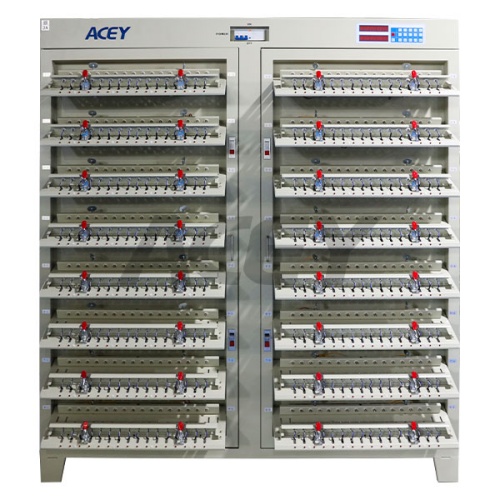
A lIthiumIon Zellsortiermaschine führt programmierte Lade-Entlade-Zyklen über mehrere Kanäle durch und zeichnet die Daten für jede Zelle auf.
ACEY-Sortiersysteme können für gängige zylindrische Formate wie die folgenden konfiguriert werden:
18650 · 21700 · 26650 · 32650 · 32700 · 32140 · 33140
Verfügbare Konfigurationen umfassen:
Bei der Verarbeitung großer Zellmengen ermöglicht die Mehrkanal-Sortierung die gleichzeitige Prüfung von Hunderten von Zellen, bevor diese in die Verpackungsphase gelangen.
Empfohlene Ausrüstung: Batteriezellen-Sortiermaschine
Schritt 2 – Aufbringen des Isolierpapiers
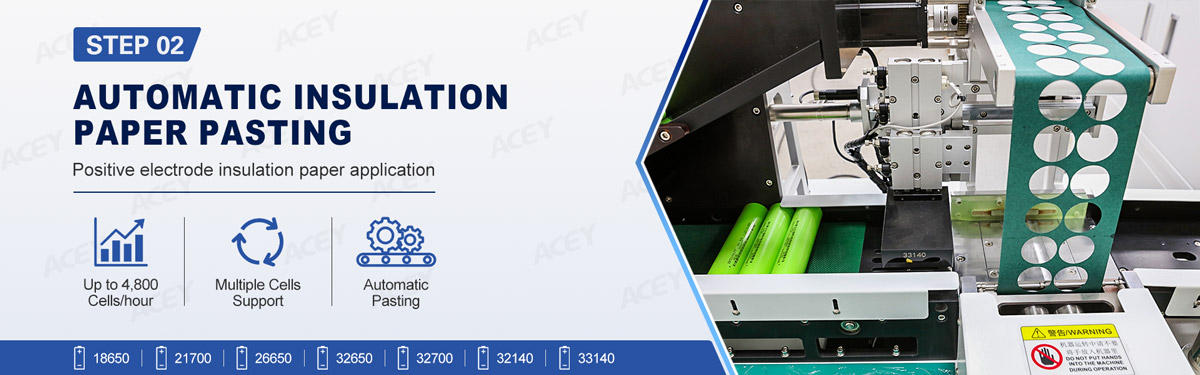
Nach der Kapazitätsbewertung wird Isolierpapier um den positiven Anschluss angebracht.
Diese zusätzliche Isolierung hilft dabei, den positiven Anschlussbereich während der Montage vom Metallgehäuse der Zelle (Anode) zu trennen.
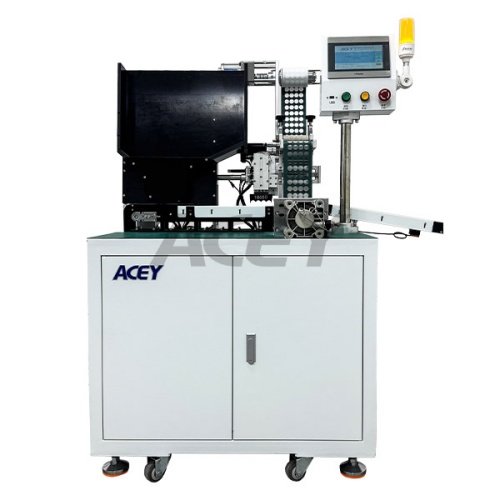
Einautomatische Isolierpapier-KlebemaschineSchneidet und appliziert das Papier mit gleichmäßiger Positionierung. ACEY-Maschinen können mit austauschbaren Werkzeugen für verschiedene zylindrische Zellen ausgestattet werden.
Die Produktionsgeschwindigkeit kann je nach Zellen- und Maschinenkonfiguration bis zu 4.800 Zellen pro Stunde erreichen.
Gängige Formate sind:
18650 · 21700 · 26650 · 32650 · 32700
Larger cylindrical cells such as 32140 and 33140 require suitable tooling and machine configuration.
Recommended Equipment: Battery Insulation Paper Sticking Machine
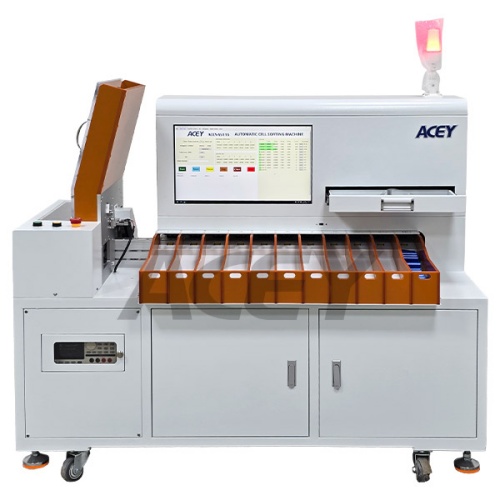
Step 3 — OCV and Internal Resistance Sorting
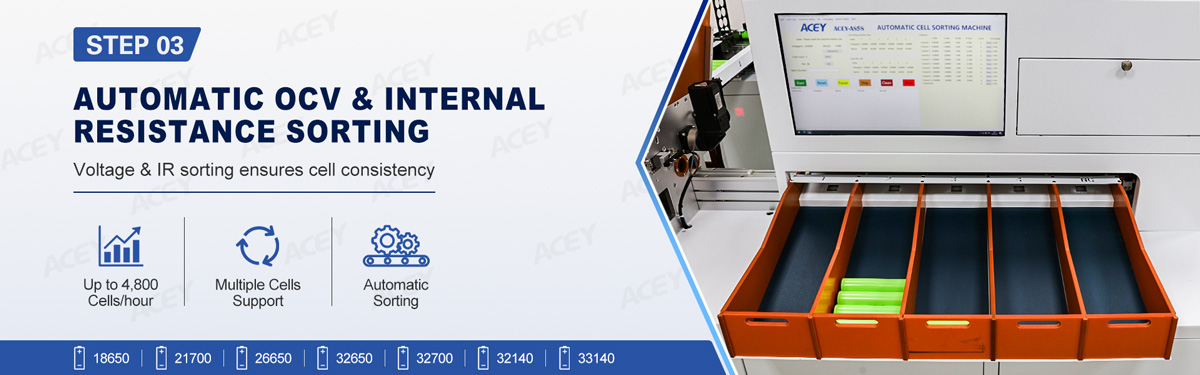
Capacity grading alone is not enough for final cell matching.
Before assembly, it is also necessary to measure theopen-circuit voltageandAC internal resistanceof the battery cells to ensure the consistency of the battery pack.
The measured values are compared with preset ranges, and the cells are automatically separated into different groups.
ACEY cylindrical battery sorting machines are available with standard 5-, 6-, 10-, or 11-channel configurations, with customized options also available. They can be integrated with branded testers such as the HIOKI BT3561 or other compatible instruments to measure open-circuit voltage (OCV) and AC internal resistance.
Barcode scanning can also be added when the production process requires cell-level traceability.
Cells with large differences in voltage or resistance may behave differently under charge and discharge. Sorting helps the manufacturer build packs from cells with closer electrical characteristics.
For production lines that combine insulation paper application and sorting, these processes can also be integrated to reduce repeated cell handling.
Recommended Equipment: Cylindrical Battery Sorting Machine
Step 4 — Cell Arrangement and Polarity Inspection
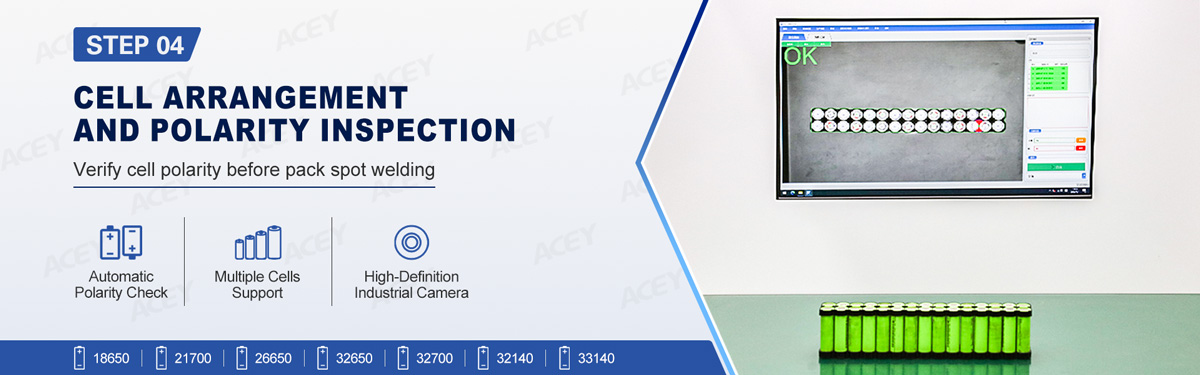
Sorted cells are placed into the required series-parallel arrangement using cell holders or dedicated fixtures.
Before welding, the positive and negative orientation of every cell should be checked.
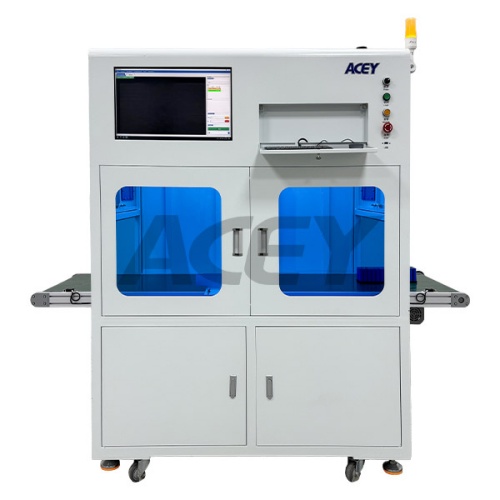
For small production runs, this may be done manually. On semi-automatic and automatic lines, a CCD polarity inspection system is more reliable because it checks the complete cell group against the preset pattern.
ACEY CCD inspection systems can be configured for cylindrical cells including:
18650 · 21700 · 26650 · 32650 · 32700 · 32140 · 33140
Any reversed or incorrectly positioned cell can be identified before the pack enters the welding station.
Recommended Equipment: CCD Tester
Step 5 — Battery Pack Spot Welding
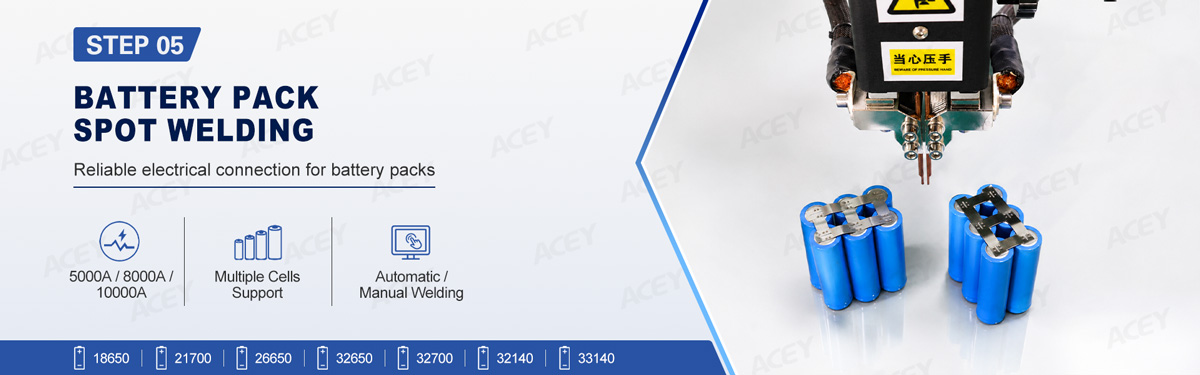
Spot welding is one of the most important operations in cylindrical battery pack assembly.
The cells are connected in series and parallel by welding nickel or nickel-plated connecting strips to the cell terminals.
The welding result is affected by more than welding current. The main process variables include:
ACEY provides 5000A, 8000A and 10000A DC inverter or transistor welding power supply configurations for cylindrical battery pack assembly.
Machine options include:
Automatic models can store welding programs for different battery pack designs and move between preset welding positions.
For production use, welding parameters should be validated with the actual cell and connecting strip. A parameter that works well on one battery pack should not automatically be copied to another design.
The inspection criteria may include weld appearance, connection strength and electrical resistance according to the manufacturer’s own process standard.
Recommended Equipment: Battery Pack Spot Welding Machine
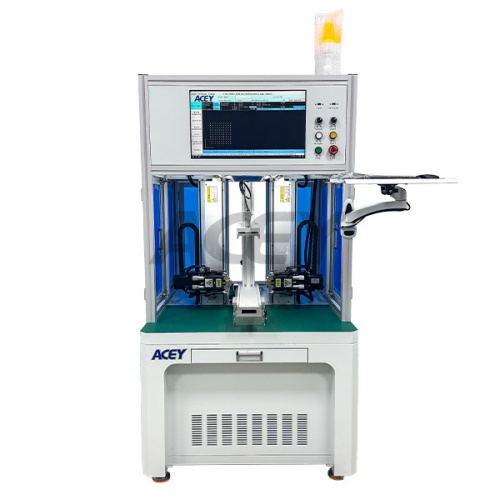
Step 6 — BMS Testing and Installation
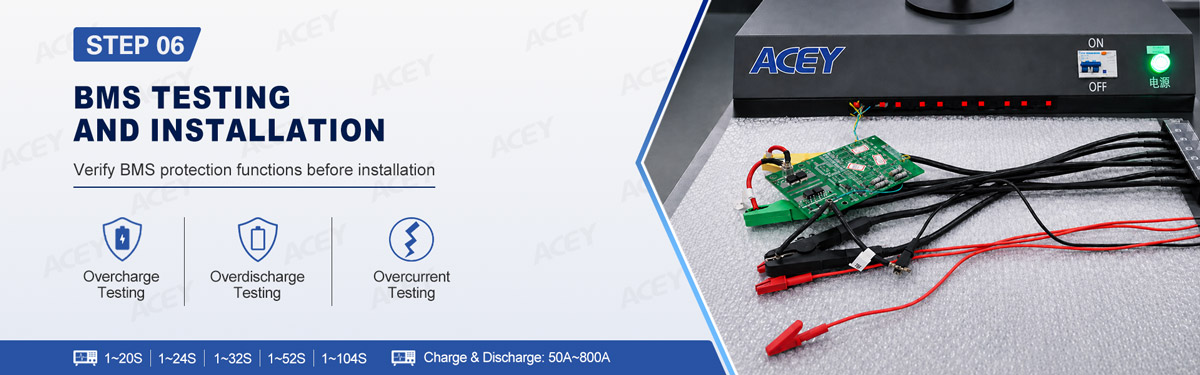
After the cell groups are electrically connected, the battery management system is installed according to the pack design.
Before installation or final integration, the BMS can be tested to verify its protection functions.
A BMS tester mainly check functions such as:
The required test range is determined by the BMS series count, voltage and current rating.
After BMS verification, assembly work includes:
This part of the process varies significantly from one battery pack to another. BMS specifications and electrical drawings are therefore important when configuring the assembly workstation or production line.
Recommended Equipment: BMS Tester
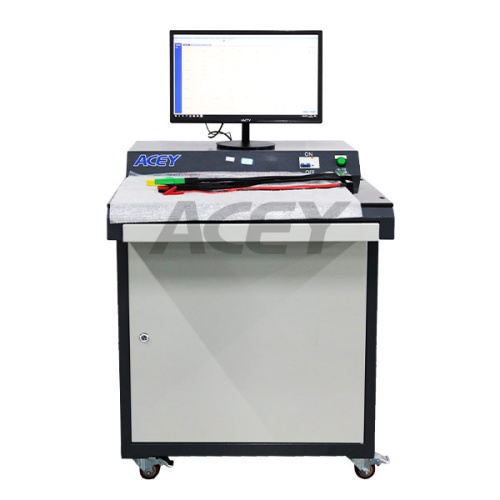
Step 7 — Finished Battery Pack Testing
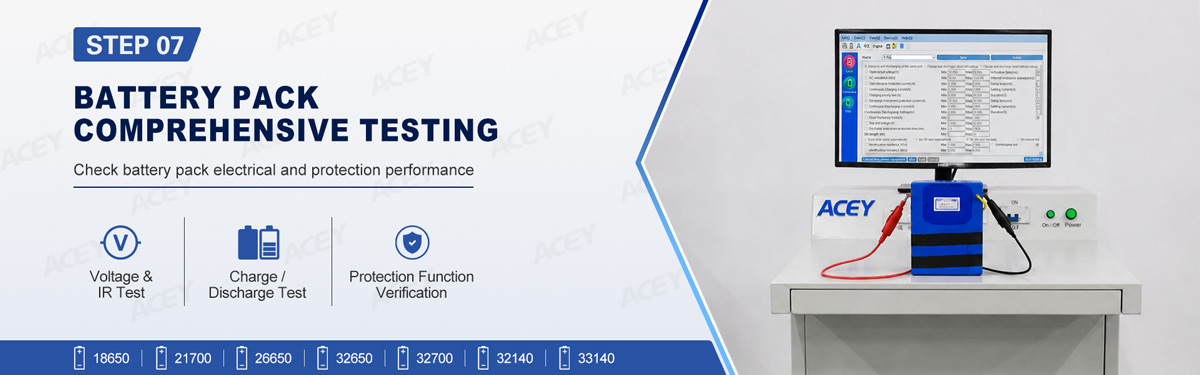
Once the BMS, wiring and electrical connections are complete, the battery pack is tested as a finished assembly.
This step checks components and connections introduced during battery pack assembly rather than the performance of an individual cell.
A battery comprehensive tester can be configured to test:
Upper and lower limits are set in the test program, allowing the equipment to identify qualified and unqualified packs.
Finished pack testing is particularly useful for detecting problems related to:
ACEY provides different voltage and current configurations for small and larger battery packs.
Recommended Equipment: Battery Comprehensive Tester
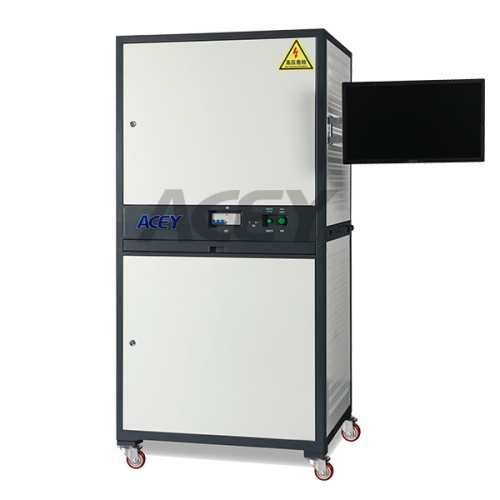
Step 8 — Battery Pack Packaging
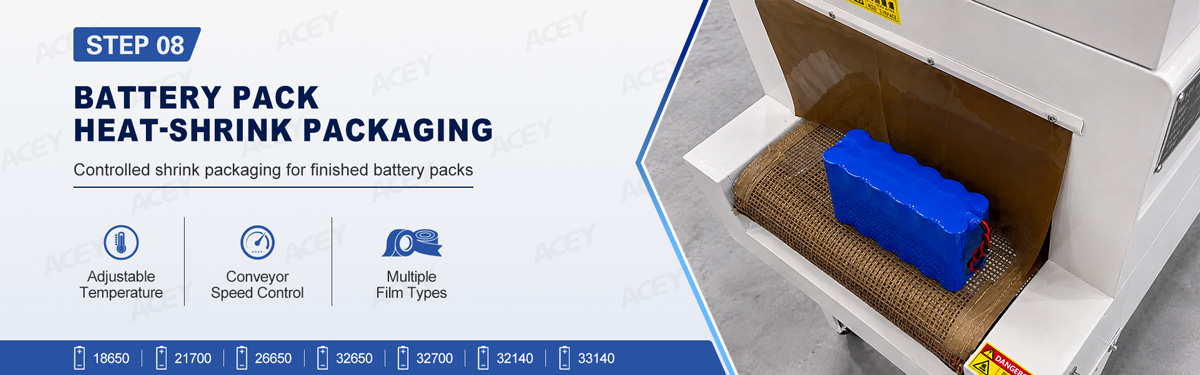
After electrical testing, the pack is prepared for final packaging.
The packaging method may include:
For heat-shrink packaging, the pack passes through a temperature-controlled shrink tunnel.
ACEY heat shrink machines are available with adjustable conveyor speed and temperature settings for different pack sizes and film materials.
Recommended Equipment: Automatic Heat Shrink Wrap Machine
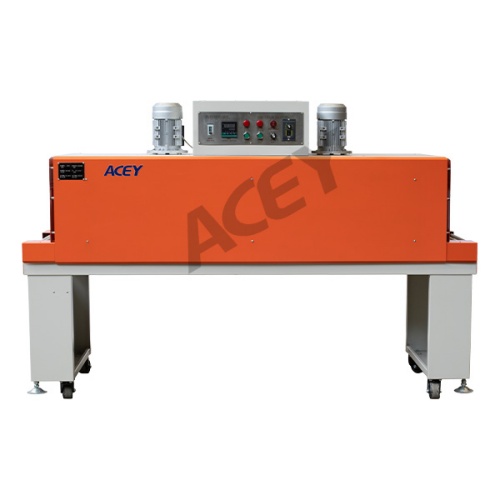
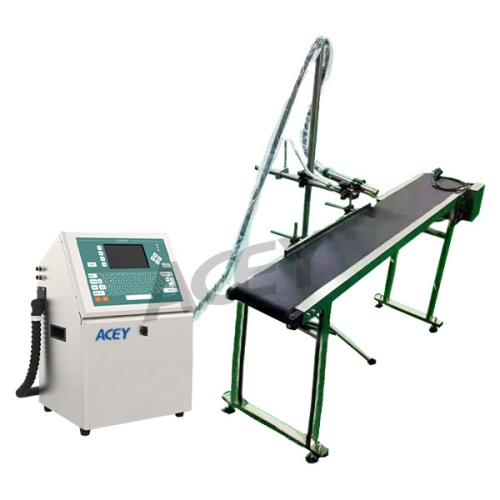
Step 9 — Coding and Traceability
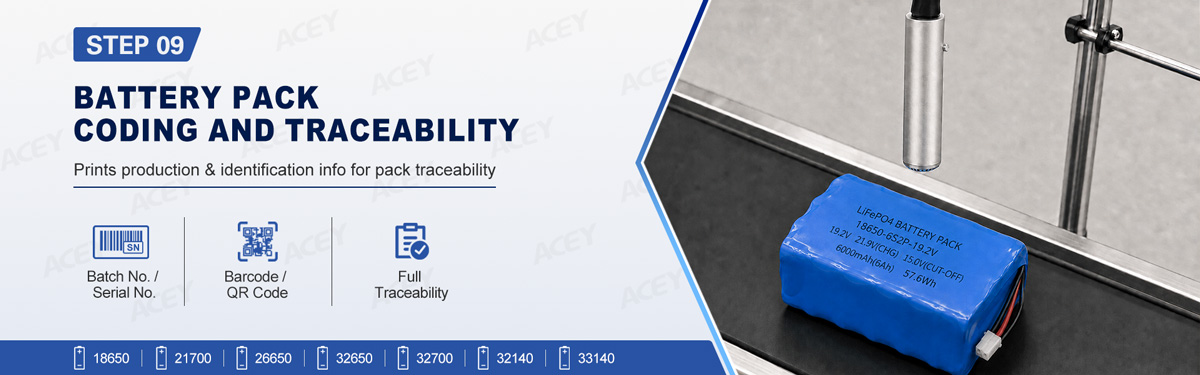
Pack identification is added before shipment or aging.
Printed information includes:
A handheld printer may be enough for small-batch production, while conveyor-based or continuous inkjet printers are more suitable for production lines.
If traceability is required, the printed code can be linked with earlier cell or pack test records.
Recommended Equipment: Battery Pack Coding Machine
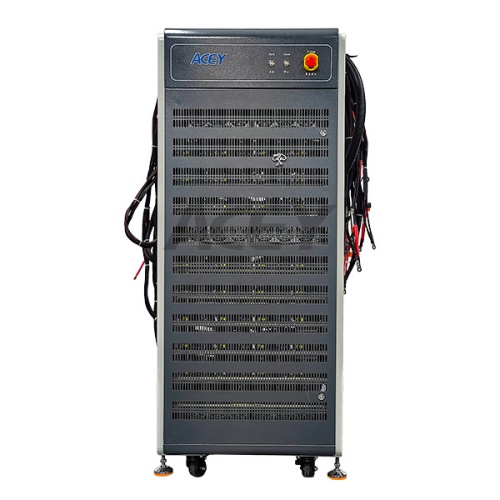
Step 10 — Charge/Discharge Aging
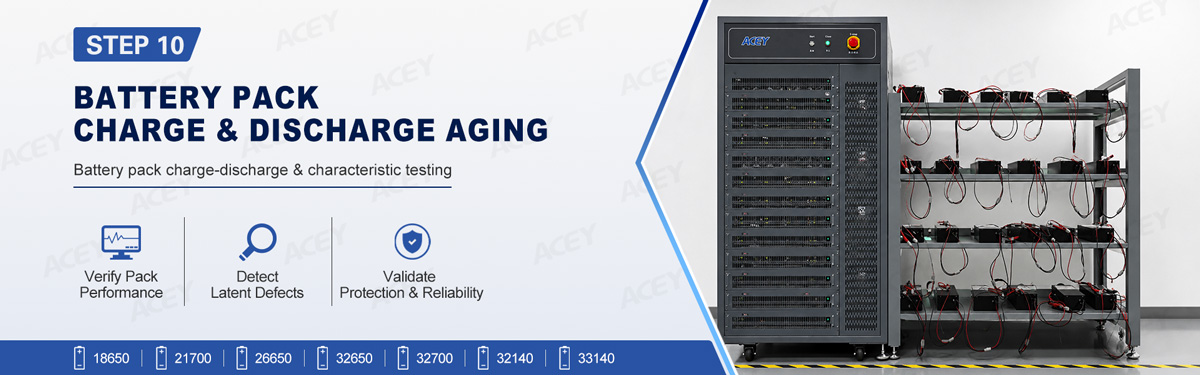
Aging is one of the final electrical verification steps.
The battery pack is charged and discharged according to a programmed test sequence. The system can record:
ACEY battery pack charge-discharge and aging systems cover a wide range of battery pack applications.
Available configurations include:
The selected tester must cover the pack’s maximum voltage and required charge/discharge current. Channel quantity is usually selected according to the planned production output and aging time.
For higher-power applications, energy-feedback systems can return part of the discharge energy to the electrical network instead of dissipating it only as heat.
Recommended Equipment: Battery Pack Aging Machine
Semi-Automatic or Fully Automatic?
The higher automation option is not always the better choice.
A semi-automatic production setup is more flexible when the manufacturer produces several battery pack models or changes fixtures frequently.
| Factor | Semi-Automatic Line | Fully Automatic Line |
| Production Volume | Small to medium | Medium to high |
| Investment | Lower | Higher |
| Changeover | More flexible | More dependent on tooling and line design |
| Labor | More manual operations | Lower labor requirement |
| Integration | Standalone or partially connected equipment | Integrated material flow |
| Traceability | Added where required | Easier to integrate across multiple processes |
Many cylindrical battery pack lines use a combination of both.
For example, cell sorting, CCD polarity inspection and automatic spot welding can be automated, while BMS installation, wiring or enclosure assembly remains manual.
This approach often gives better flexibility than trying to automate every process from the beginning.
How to Configure Cylindrical Battery Pack Assembly Equipment
The equipment should be selected from the actual battery pack design rather than only from the cell model.
Two 21700 battery packs may require completely different fixtures, welding machines and test systems if their series-parallel configuration, current requirement and mechanical structure are different.
Before equipment selection, it is useful to confirm the following information.
Cell Information
Battery Pack Design
Welding Information
BMS Information
Production Requirement
Testing Requirement
These details make it much easier to match each machine to the actual process and avoid buying equipment with either insufficient capacity or unnecessary specifications.
ACEY Cylindrical Battery Pack Assembly Solutions
ACEY supplies individual machines, semi-automatic production equipment and fully automatic assembly solutions for cylindrical lithium battery packs.
Equipment can be configured for cells including:
18650 · 21700 · 26650 · 32650 · 32700 · 32140 · 33140
Available processes cover:
For production-line projects, the configuration is developed around the customer’s battery pack, required output and test process rather than from a fixed machine list.
Planning a Cylindrical Battery Pack Project?
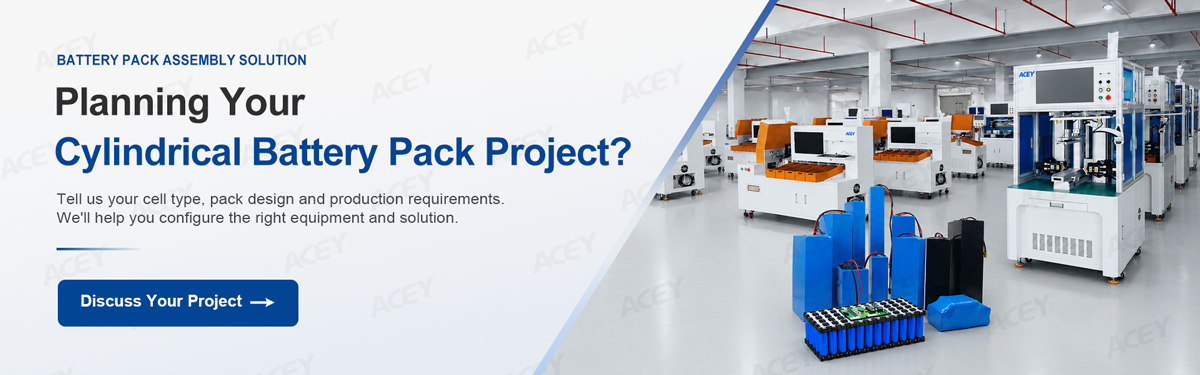
Please provide:
This information allows us to recommend the required machines, tooling, welding configuration and test system for the actual pack.
Discuss Your Battery Pack Assembly Project →
Frequently Asked Questions
*What machines are needed to make a cylindrical battery pack?
A typical production setup may include a cell grading machine, insulation paper sticking machine, OCV/IR sorter, CCD polarity tester, spot welder, BMS tester, battery comprehensive tester, packaging machine, coding machine and battery pack aging tester.
Small-batch production does not necessarily require all processes to be automated.
*What cylindrical cells can be used?
Common formats include 18650, 21700, 26650, 32650, 32700, 32140 and 33140.
Whether one machine can handle several cell sizes depends on its mechanical range and tooling. Fixtures, feeders and holders may need to be changed when switching cell formats.
What is the difference between capacity grading and OCV/IR sorting?
Capacity grading measures cell capacity through charge-discharge testing.
OCV/IR sorting measures open-circuit voltage and internal resistance and groups the cells according to preset ranges.
They are different steps and are often used together before battery pack assembly.
Why check cell polarity before welding?
A reversed cell can create the wrong series-parallel connection once the nickel strip is welded.
CCD inspection checks the complete cell arrangement before welding and identifies cells placed in the wrong direction.
What type of spot welder is used for cylindrical battery packs?
Resistance spot welding is commonly used for nickel and nickel-plated connecting strips.
ACEY provides 5000A, 8000A and 10000A welding power supply, including gantry, single-side automatic and double-side automatic configurations.
Die Maschinen- und Schweißparameter sollten entsprechend dem Zellenanschluss, dem Bandmaterial, der Banddicke und dem Schweißmuster ausgewählt werden.
Was ist der Unterschied zwischen Teig?y pack umfassende Tests und Alterungstests?
Kann eine Produktionslinie verschiedene Akkupacks herstellen?
Ja, aber nicht ohne Umstellung.
Ändern sich der Zellendurchmesser, die Packungsabmessungen oder das Schweißmuster, müssen auch die Halterung, die Vorrichtung, die Zuführung oder das Schweißprogramm geändert werden.
Halbautomatische Fertigungslinien bieten mehr Flexibilität für Kunden, die mehrere Akkupack-Modelle herstellen.
Welche Informationen benötigt ACEY, bevor eine Produktionslinie empfohlen werden kann?
Die nützlichsten Informationen sind:
Anhand dieser Details können die Ausrüstung und Werkzeuge auf den jeweiligen Akku abgestimmt werden, anstatt eine generische Leitungskonfiguration zu verwenden.
Rm703, No.223, Qishan North Road, Huli District, Xiamen, Fujian, China
Email : allen@xmacey.com
Tel : +8618950009155
Whatsapp : +8618950009155