XIAMEN ACEY NEW ENERGY TECHNOLOGY CO., LTD.
Drone Battery Pack Assembly Solution for 21700 FPV Batteries
Nov 26, 2026
21700 Drone Battery Pack Assembly Solution
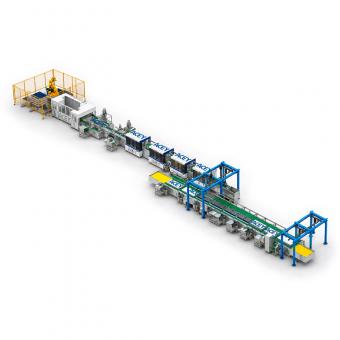
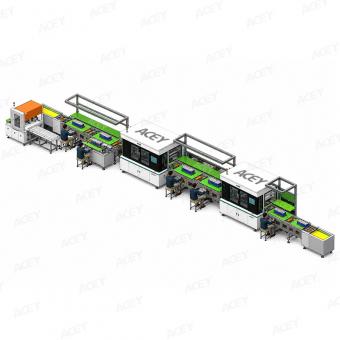
ACEY supplies equipment for assembling 21700 drone battery packs, from cell grading and sorting to double-sided spot welding, pack testing and aging. Fixtures fit the cell layout, and test equipment is selected for the pack voltage and current.
The example below uses twelve 5Ah cells to build a 6S2P, 10Ah pack for UAV and long-range FPV applications. It is planned for 100–200 packs per day, with automatic processing and testing alongside manual assembly stations.
Reference 6S2P Drone Battery Pack
The pack utilizes 3.6V, 5Ah high-rate cells (such as the EVE INR21700/50PL) configured in a 6S2P arrangement, resulting in a nominal pack voltage of 21.6V and a capacity of 10Ah.
| Parameter | Reference specification |
| Cell format | 21700 cylindrical lithium-ion |
| Example cell | EVE INR21700/50PL, 3.6V, 5.0Ah |
| Cell dimensions | Ø21.15 ± 0.10mm × 70.15 ± 0.15mm, including sleeve |
| Pack configuration | 6S2P, 12 cells per pack |
| Nominal voltage / capacity / energy | 21.6V / 10Ah / 216Wh |
| Charge cutoff voltage | 25.2V |
| Application voltage range | 18.0–25.2V for this reference design |
| Discharge design targets | 50A continuous; 100A for 10 seconds |
| Reference charging current | 5–10A, subject to the pack design |
| Pack dimensions, weight and BMS | Defined by the finished pack structure and application |
The 50A continuous and 100A pulse targets require testing on the finished pack, including voltage drop and heating in the interconnects, BMS, leads and connector. The 18V cutoff is the application limit used in this example.
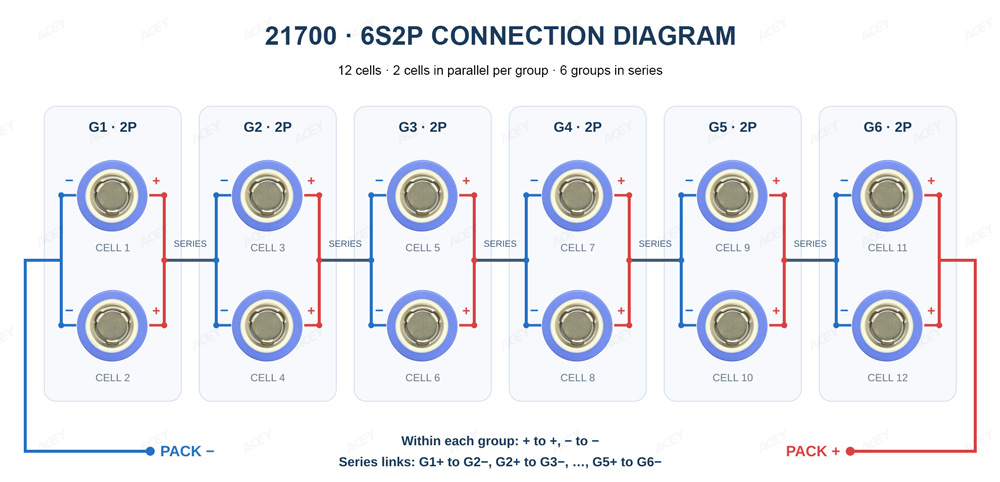
21700 · 6S2P CONNECTION DIAGRAM
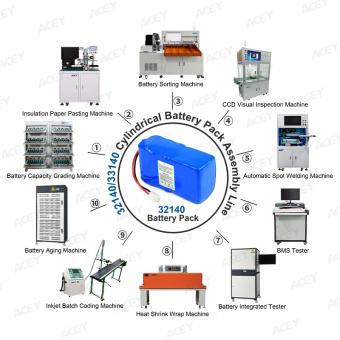
21700 Drone Battery Pack Assembly Process
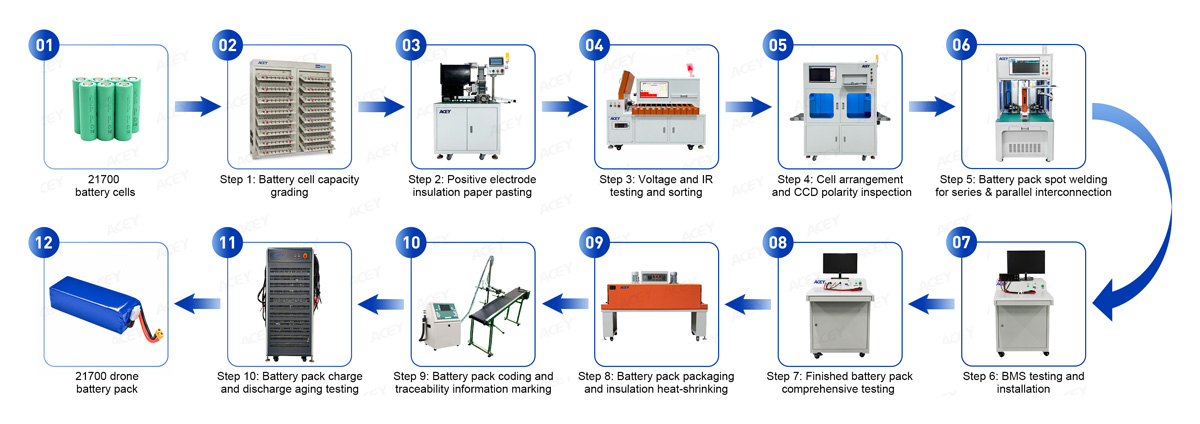
21700 Drone Battery Pack Assembly Process
Cells are graded and sorted before grouping. Polarity is checked before welding, and the pack is retested after aging.
| Stage | Process | Main purpose |
| 1 | Incoming cell inspection | Check cell model, batch, dimensions, sleeve condition, OCV and internal resistance. |
| 2 | Cell capacity grading | Measure discharge capacity under a common charge-discharge program and retain capacity-grade records. |
| 3 | Insulation paper application | Apply positive-end insulation rings and check positioning, missing rings and lifted edges. |
| 4 | OCV and ACIR sorting | Sort cells into collection channels by open-circuit voltage and AC internal resistance. |
| 5 | Grouping and CCD polarity inspection | Load twelve matched cells into the fixture and confirm the specified polarity pattern. |
| 6 | Interconnect spot welding | Weld the connecting strips to both ends using a validated welding recipe. |
| 7 | BMS and lead assembly | Install a tested BMS, check sense-wire order, and complete lead and connector connections. |
| 8 | Initial pack testing | Check voltage, internal resistance, charge-discharge paths and the specified electrical functions. |
| 9 | Insulation, heat shrinking and marking | Secure and insulate internal parts, apply the outer sleeve, and associate the pack with its serial number. |
| 10 | Aging, final retesting and inspection | Run the charge-discharge program, set the required shipping SOC, and complete electrical and appearance checks. |
The BMS board is tested before connection to the cells. The tester simulates cell voltages to check protection thresholds, recovery, response times and balancing. Tests after pack assembly check the wiring, voltage sensing and communication functions included in the product.
Recommended Assembly and Testing Equipment
The table shows equipment for 200 packs per day. Grading and aging quantities follow the test schedules described below.
| Station | Equipment | Recommended Model | Reference configuration | Quantity |
| Cell grading | Battery Capacity Grading Machine | ACEY-BCT506R-512H | 5V6A, 512 channels, regenerative type, 0.05% accuracy | 2 units |
| Paper application | 21700 Insulation Paper Sticking Machine | ACEY-BS01 | Cell-specific punching die, guides and positioning parts | 1 unit |
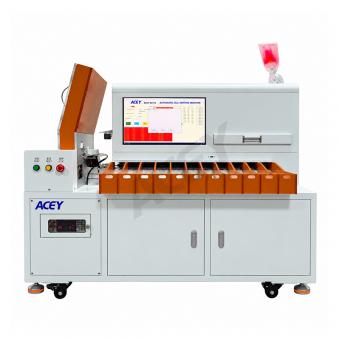
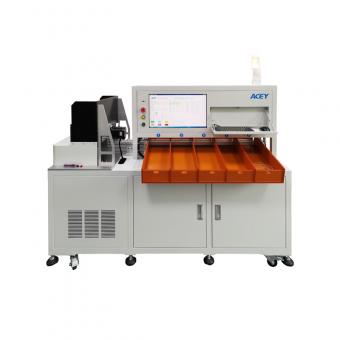
| Cell sorting | Battery Sorting Machine | ACEY-AS11S | 11 collection channels; HIOKI BT3561A tester; approximately 3,200 cells/hour | 1 unit |
| Grouping | Pack Assembly Fixture | / | Custom 6S2P arrangement and locating features | 1 station |
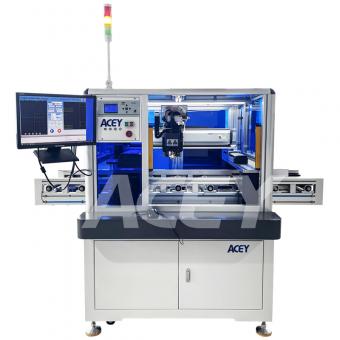
| Polarity inspection | CCD Polarity Inspection System | ACEY-CCD01C | Pack field of view, recipe and positioning matched to the layout | 1 set |
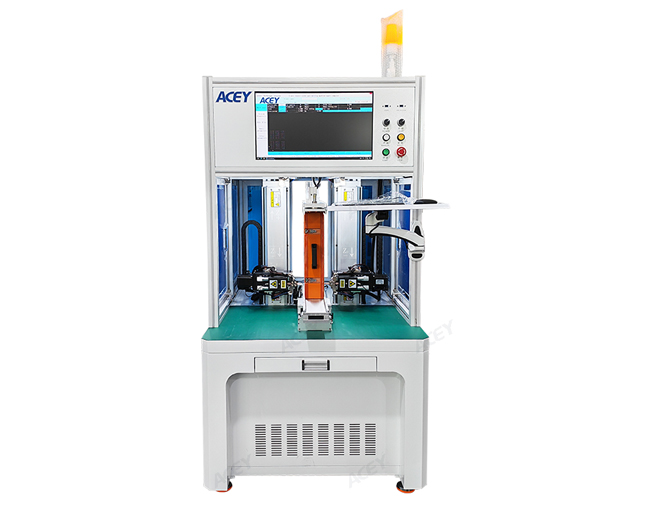
| Spot welding | Battery Pack Spot Welder | ACEY-D300B | Automatic double-sided welding; power supply and electrodes matched to the interconnect | 1 unit |
| BMS board testing | Bms Testing Equipment | ACEY-BP24 Series | Voltage accuracy ±0.1%; current range and functions matched to the BMS | 1 unit |
| BMS and leads | Assembly Tools And Fixtures | / | Soldering or crimping, sense-wire checks and lead restraint | 1 station |
| Pack testing | Battery Pack Comprehensive Tester | ACEY-BIT60-30A300A | 60V, up to 30A charge and 300A discharge; project-specific test program | 1 unit initially |
| Heat shrinking | Heat-Shrink Packaging Machine | ACEY-HSM5035C | Tunnel size and thermal process matched to the finished pack | 1 unit |
| Identification | Coding/Marking Machine | ACEY-CP2 | Pack serial number, batch and product identification | 1 station |
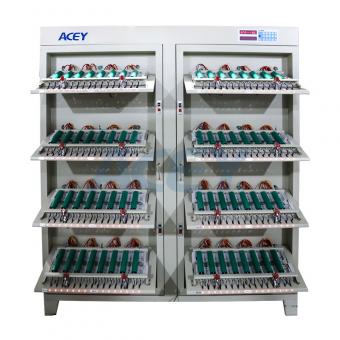
| Pack aging | Battery Aging Cabinet | ACEY-BA6050-24 | 24 channels per cabinet; 120 channels in total | 5 cabinets |
Key Equipment Selection Points
Cell Matching Before Assembly
The cell grading system measures discharge capacity. Cells from the same capacity grade are then fed to the ACEY-AS11S battery cell sorting machine for OCV and ACIR sorting. Capacity records can be tracked by batch or linked to individual cell codes.
OCV and ACIR limits apply at a defined SOC, temperature and rest time. Keeping these conditions consistent makes the sorting results comparable.
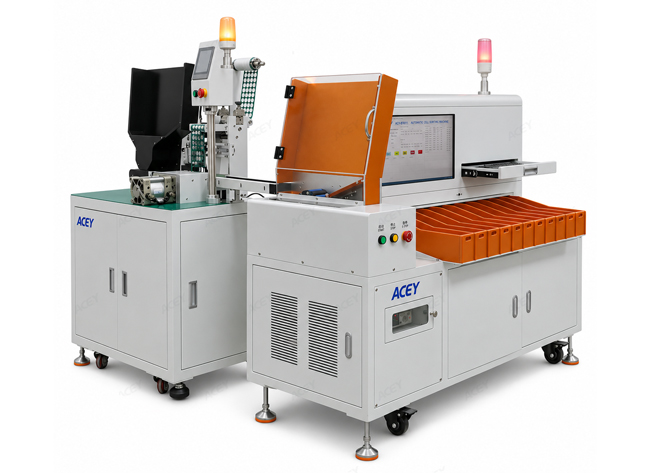
ACEY-SS11 Automatic Battery Insulation Paper Pasting and Sorting Machine 2-in-1
Interconnects and Double-Sided Spot Welding
Interconnect selection starts with the current each section carries. For the 50A continuous and 100A pulse targets, ACEY checks the material, cross-section and weld locations. Copper-nickel composite strips are one option; sample welds and load tests determine the suitable thickness and width.
The ACEY-D300B double-sided battery pack spot welder welds both ends without unloading and turning the pack. The fixture must hold the cells and strips securely while allowing the electrodes to reach each weld. Sample checks include peel or pull strength, connection resistance and temperature rise.
ACEY-D300B 10000A Double-sided Battery Pack Spot Welder
BMS Board Testing and Pack Testing
The BMS tester checks protection and recovery voltages, overcurrent thresholds, short-circuit response, current consumption and balancing. Communication tests can be added for smart BMS products.
The recommended ACEY-BIT60-30A300A battery pack comprehensive tester supports 60V, up to 30A charging and 300A discharging. ACEY sets the test current, protection checks and pulse duration for the pack. NTC and communication tests are included when required.
The comprehensive tester performs short electrical checks. The aging cabinets run full charge-discharge programs and measure capacity. One comprehensive tester can serve both initial inspection and final retesting if the combined cycle time meets the daily output target.
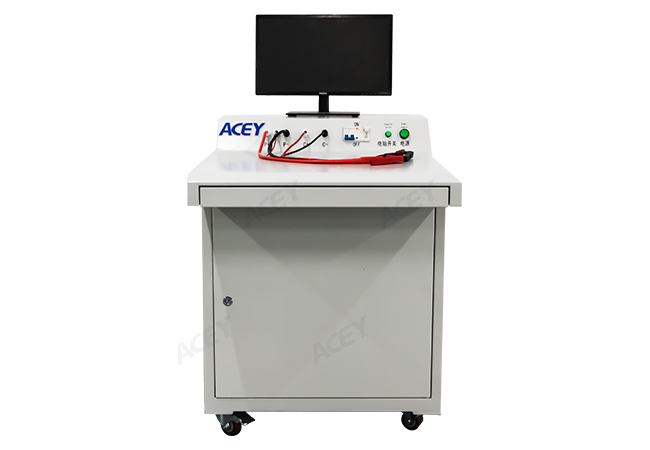
ACEY-BIT60-30A300A battery pack comprehensive tester
Aging Channels and Test Programs
The pack aging cabinets provide 24 channels each at 60V50A. A 1C test on this 10Ah pack uses 10A. The 100A pulse test is assigned to a pack tester or separate load system with sufficient power and pulse duration.
The aging program includes charging, discharging, rest and a final SOC adjustment for shipment. Options include cell-voltage and temperature measurement, BMS communication and energy recovery during discharge.
Planning for 100–200 Packs per Day
Two eight-hour shifts at 200 packs per day require an average of 12.5 packs per hour and 2,400 cells per day. Grading and aging take longer than assembly, so their channel counts need a separate calculation.
| Planning item | 100 packs/day | 200 packs/day |
| Cell demand | 1,200 cells/day | 2,400 cells/day |
| 512-channel grading cabinets | 1 unit | 2 units |
| Grading schedule assumption | 3 batches per cabinet/day | 3 batches per cabinet/day |
| 24-channel aging cabinets | 3 cabinets / 72 channels | 5 cabinets / 120 channels |
| Pack comprehensive tester | 1 unit initially | 1 unit initially |
Grading is calculated at three batches per cabinet per day, about six hours per batch, using trays and allowing a batch to finish outside staffed shifts. Aging is calculated at eight hours per pack, a 20-hour daily scheduling window and 80% utilization.
For 200 packs per day, the aging calculation is 200 × 8 ÷ 20 ÷ 80% = 100 channels. Five 24-channel cabinets provide 120 channels. One comprehensive tester is sufficient if initial inspection and final retesting together take about three minutes per pack, including scanning and connection. Longer programs or handling times require a new capacity check.
Quality Control and Production Data
Load tests check voltage drop and heating in the interconnects, BMS, main leads and connector. Testing at low SOC also shows whether voltage falls below the drone’s operating limit. Assembly checks cover the following points:
Why Choose ACEY
Founded in 2009, ACEY is a China-based manufacturer and solutions provider for battery pack assembly and testing equipment, with 17+ years of battery equipment experience, 400+ projects and customers in 50+ countries.
Frequently Asked Questions
Can the equipment handle 21700 cells from different brands?
ACEY can match fixtures and feeding parts to the selected cells. Actual diameter, height, sleeve, positive-terminal structure and dimensional tolerances are reviewed before configuration. Cells with the same 21700 designation may require adjustments.
Can this solution be adapted to other series and parallel layouts?
Yes. ACEY can review other layouts by matching fixtures, welding access, BMS test series count, pack test voltage and aging capacity. Moving to 12S or 14S also requires a review of charge cutoff voltage and test headroom; voltage range alone does not establish full compatibility.
How many aging channels are needed for 200 packs per day?
This example uses five 24-channel cabinets, or 120 channels, based on eight-hour total occupancy, a 20-hour daily scheduling window and 80% planned utilization. Longer cycling, rest or SOC-adjustment programs change the channel requirement.
Can ACEY test a BMS with CAN or SMBus communication?
ACEY can configure communication testing for the BMS. Send the BMS sample, protocol documents and required test items so we can check the interface and test software before selecting the configuration.
Can capacity be increased later?
Additional grading and aging channels can expand long-cycle testing capacity. Assembly expansion may involve parallel fixtures, additional test stations or a different automation level. ACEY reviews the bottleneck against the new pack design and output target.
Request a 21700 Drone Battery Pack Assembly Configuration
Send ACEY the cell datasheet, series/parallel layout, pack drawing, continuous and pulse discharge requirements, BMS information, test program and daily output target. We can recommend the equipment, fixtures and test channels for your production plan.
Discuss Your Drone Battery Pack Assembly Requirements →
Rm703, No.223, Qishan North Road, Huli District, Xiamen, Fujian, China
Email : allen@xmacey.com
Tel : +8618950009155
Whatsapp : +8618950009155